Settling up
When a real-money pot resolves, the people who owe pay the people who are owed, directly. kapiche just keeps the receipts, so paying up (or not) shows on your reputation.
Settlement on kapiche is peer-to-peer: when a pot resolves, players send each other money directly, and kapiche records who settled up. That record is what makes the next pot possible, because it shows everyone who is good for it. See Security & non-custodial.
How settlement works
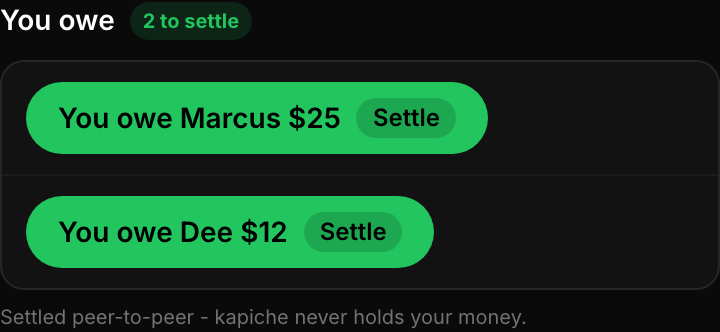
Every real-money pot follows the same five beats: it resolves, you see what you owe, you pay, the payment is confirmed, and your Settle Score updates. Here is each step, shown.
The pot resolves
You see what you owe
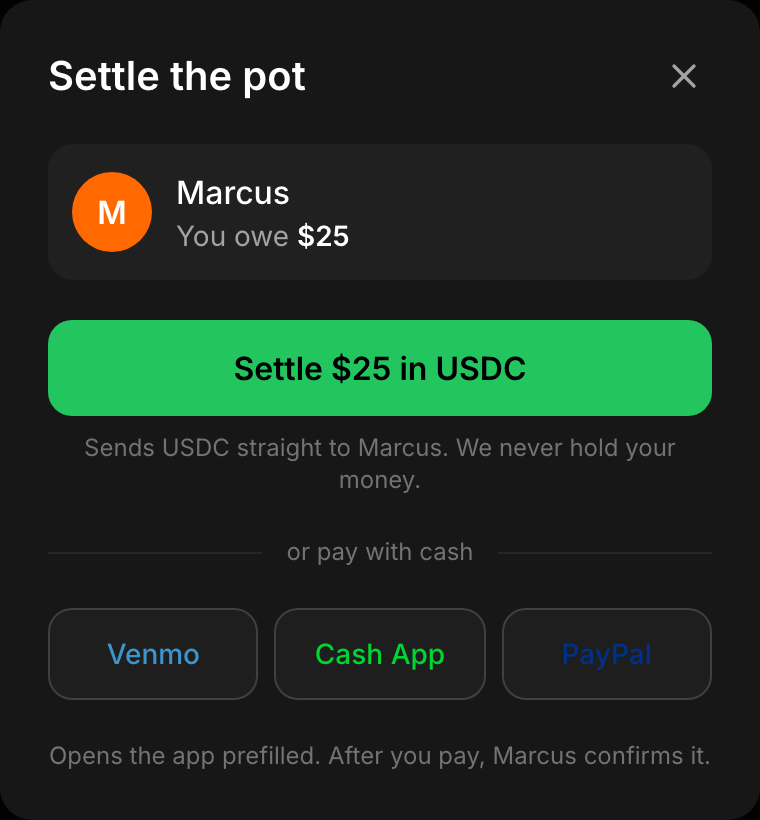
Pay them directly
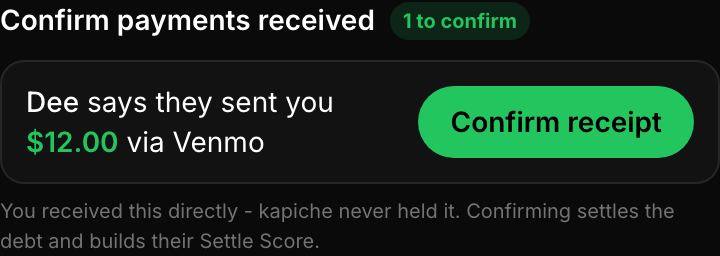
It gets confirmed
Your Settle Score updates
Two ways to pay, two ways to confirm
How a debt closes depends on the rail you choose. Crypto is instant and self-proving; a cash app needs the other person to confirm they got it.
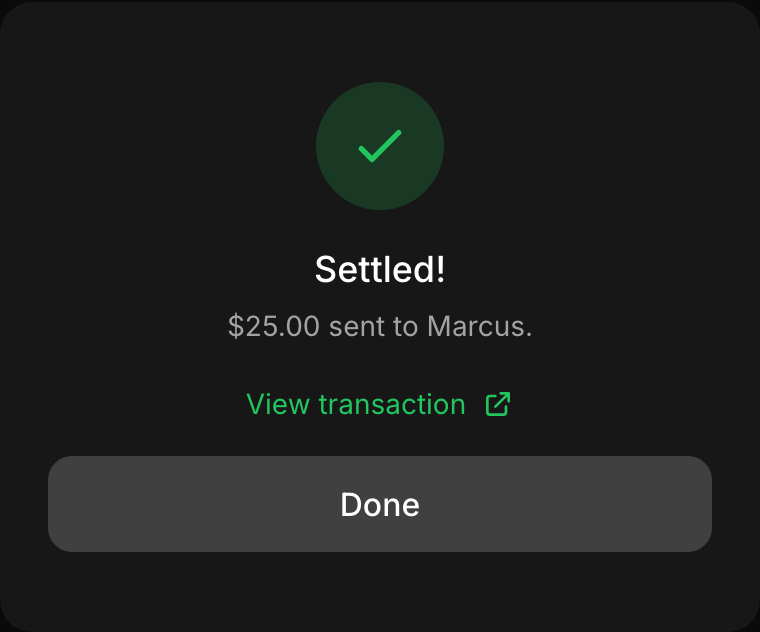
USDC: verified onchain
One tap sends USDC straight to the other player. kapiche reads the public ledger to confirm the exact transfer landed, then marks the debt settled. No one has to do anything else.
Cash app: confirmed by them
Venmo, Cash App, or PayPal opens prefilled. You pay, you tap I sent it, and the debt stays open until the person you paid confirms they received it.
You send every payment yourself
What happens if you do not settle
Settling is on you, and the cost of not paying is reputational and public. Your Settles up reputation is a trust verdict, not a number, and it is computed straight from your real-money debts:
- Reliable (green): you have paid at least 90% of what you owed, and you pay fast (within about two days).
- Slow (yellow): you pay, but you take your time.
- Flaky (red flag): less than 70% of your debts are settled. This is the lowest tier, and it is the one people see first.
- New: no real-money history yet. Unproven, so reputation-gated pots treat you the same as Flaky until you build a record.
Every debt you leave open counts against the percentage, so one unsettled pot can tip you from Reliable into Flaky. The hit shows up everywhere your name appears.
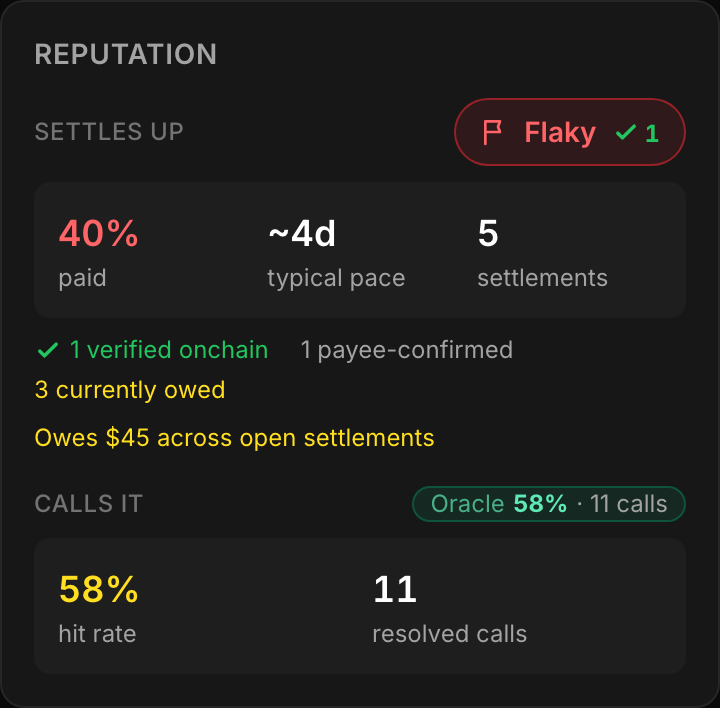
It is not only cosmetic. A host can limit a real-money pot to players with a solid settle reputation. If yours is too low, you are blocked from joining until you clear your open debts. Flaky and New players are turned away from those pots.
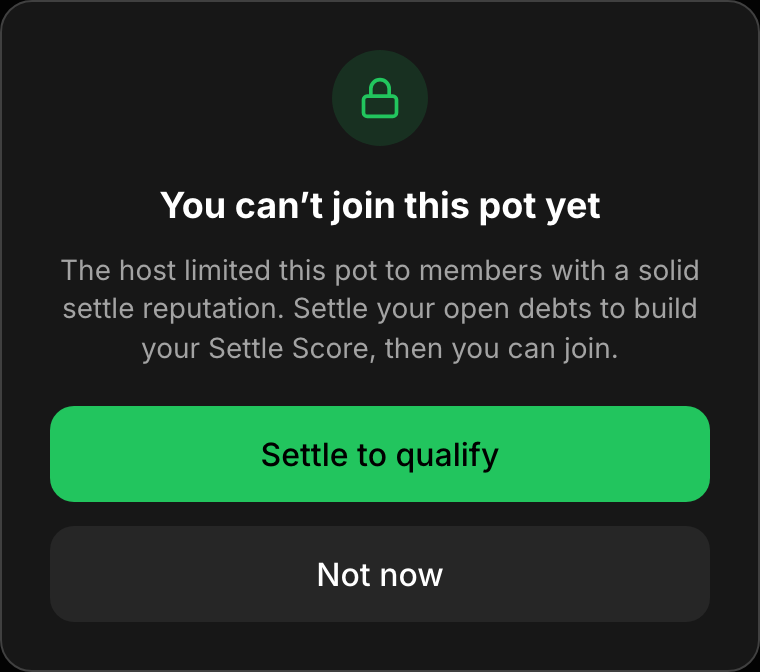
Pay up to stay in the game
Why settling up builds trust
Without escrow, the thing that makes real-money pots work is trust, and kapiche makes that trust visible. Settles up is your trust axis: it reflects whether you pay what you owe, on time. A clean record looks like this:
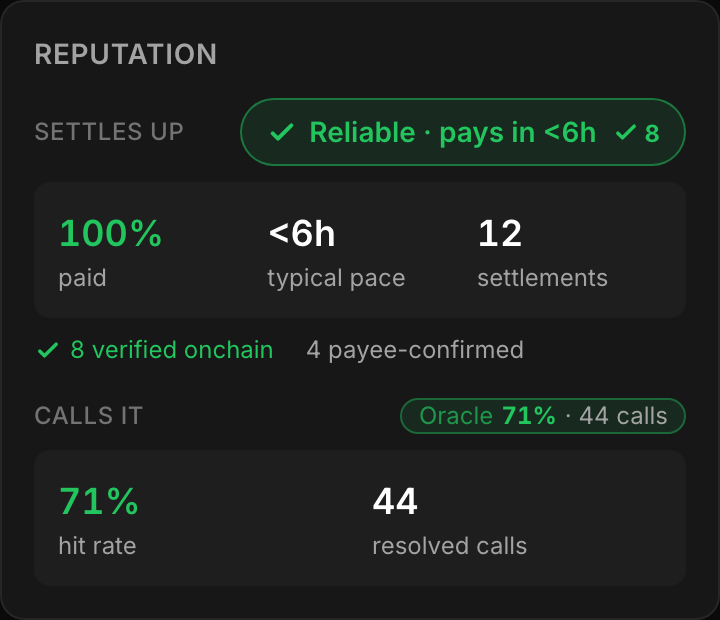
Settles up (the trust axis)
Tracks whether you follow through on real-money pots: the percent you have paid, how fast, and how much you still owe. Good for it? It shows on your profile.
Oracle accuracy (the skill axis)
A separate measure of how often you call it right, across points and real money alike. It never gates a real-money join; only Settles up does.
- Paying promptly lifts your Settles up standing toward Reliable.
- Ducking what you owe drags it toward Flaky, where friends can see.
- Together with Oracle accuracy, it tells the full story: can you call it, and do you back it up.
FAQ
Does kapiche move the money for me?
How is a USDC payment confirmed?
How is a cash-app payment confirmed?
What if someone does not pay?
Can I get blocked from a pot for not settling?
Will I ever pay without confirming?